
My latest writings









Teaching Craft
Cultivating Critical Thinkers for a Complex World
My teaching is anchored in a simple conviction: students learn best when they are challenged to think, not merely to receive information. Over the years, across institutions on three continents, I have shaped a teaching craft that emphasizes clarity, intellectual rigor, and practical application. Whether the classroom discussion centers on international law, human rights, Middle East politics, or negotiation strategy, my objective remains constant — to help students develop the analytical precision and conceptual confidence required to navigate an increasingly complex global landscape.
Pedagogical Approach
Case-Based Learning
I design each course around carefully selected cases — from ICC jurisprudence to interstate use-of-force dilemmas, from negotiation breakdowns to contemporary Middle Eastern conflicts. Cases anchor abstract theories in concrete decision-making, enabling students to engage with law and policy as living, evolving systems.
Scenario and Simulation Exercises
A core component of my teaching is the use of structured scenarios. Students work through negotiation problems, decision trees, treaty application puzzles, or crisis simulations that require strategic thinking. These exercises mirror the analytical pressures encountered in real legal and policy environments.
Integrating Research Into the Classroom
I routinely bring my ongoing research into lecture design — whether discussing lethal autonomous weapons systems, the ideological foundations of the Iranian Revolution, or emerging debates in jus ad bellum. This ensures that students engage with issues at the cutting edge of academic and policy discussion.
Clear Structure and Intellectual Accessibility
While the subject matter is often demanding, I prioritize clarity. Concepts are introduced in a logical sequence, reinforced with visual tools, and distilled into takeaway frameworks that students can reliably apply.
Selected Teaching Materials
Rather than uploading full lecture files — which evolve each term and are part of a continually refined teaching process — I share curated examples that reflect my broader pedagogical style:
- Slide Samples: A small selection of illustrative slides showing the clarity and structure I use in lectures.
- Scenario Excerpt: A short negotiation or human rights case vignette, suitable for student analysis.
- Rubric Snapshot: A sample evaluation rubric that demonstrates how I assess analytical depth, structure, and evidence.
These materials offer insight into my teaching design while preserving the fluidity and creativity of my evolving lecture content.
Courses Taught
My teaching spans several interconnected fields across law, political science, criminology, and international relations. I organize my courses into the following core areas:
- International Law and Global Governance
- International Human Rights Law and Institutions
- International Criminal Law
- International Economic Law
- International Trade Law
- Negotiation and Leadership in International Law
- Counter-Terrorism and International Law
- International Energy Law
- Middle East Studies and International Relations
- Middle East and International Relations
- Middle East History
- Transitional Justice and Society
- Law, Crime, and Society
- Criminology
- Sociology and Crime
- Psychology of Crime
- Economic Foundations of Law
- Law, Justice, and Philosophy
- Philosophy of Law
- Forensic Psychology
Teaching Philosophy
I see teaching as a collaborative intellectual endeavor. Students bring their own intuitions, lived experiences, and emerging analytical instincts to the classroom. My role is to guide, challenge, and refine those instincts — not to dictate conclusions. I aim to cultivate a classroom environment where curiosity is encouraged, assumptions are tested, and complex ideas become accessible without being simplified.
Ultimately, my teaching craft reflects a commitment to rigor, clarity, and intellectual growth. My hope is that students leave my classes not only with knowledge, but with the confidence to interrogate the world around them with discipline and depth.
A multi-year inquiry into the ideological architecture of the Islamic Republic, the revolutionary imagination that shaped 1979, and the geopolitical misreadings that allowed the revolution to take hold. This project integrates history, political theology, foreign policy, and sociological analysis.
It forms the foundation for a forthcoming full-length book and a broader intellectual re-evaluation of Iran’s trajectory.
A long-term project exploring legal, constitutional, and institutional pathways for a future post-regime Iran.
It includes work on transitional justice, emergency governance, judicial reform, security sector restructuring, and the political psychology of post-authoritarian transitions.
This project underlies the Cyrus Initiative and several related frameworks.
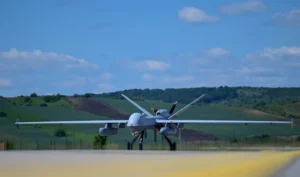
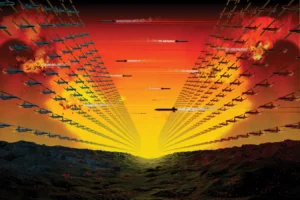
A sustained inquiry into the role of artificial intelligence in armed conflict, including attribution gaps, command responsibility, human–machine decision-making, and the emergence of lethal autonomous weapons systems.
The project aims to help shape future treaty design and the normative architecture of AI governance in war.
A long-range conceptual investigation into whether artificial systems can meaningfully model autonomy, death, or self-termination.
This inquiry examines predictive processing, computational models of emotion, ontologies of artificial agents, and how machines interpret—or misinterpret—the concept of ending themselves.
A research stream analyzing how states in the Middle East negotiate sovereignty, ideology, geopolitical pressure, and the tension between religious authority and modern constitutionalism.
This includes long-term work on velayat-e faqih, political Islam, and the region’s shifting security architecture.
An ongoing project that examines the fault lines within international law itself:
the gaps between legality and morality
the crisis of enforceability
the competing claims of sovereignty and human rights
the contradictions in institutional design
and the future of norm-based orders
Your work on the ICC, jus ad bellum, ICESCR, and Canadian implementation all fit under this broader umbrella.