
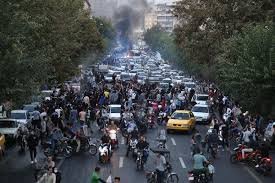
Iranians have long been called the “French of the Middle East,” a nation with a deep political temperament and a history of dramatic shifts. In the last century alone, Iran witnessed two major revolutions: the Constitutional Revolution of 1906, which set the country on a path toward modern statehood, and the 1979 upheaval, which overturned many of those early achievements. Since then, Iran has experienced a steady rhythm of unrest — from the protests of the mid-1990s to the nationwide movements of 2009, 2017, 2019, and the 2022 Women, Life, Freedom uprising.
What sets these post-1979 revolts apart is not the grievances but the regime’s response. Successive governments before 1979, even when faced with serious threats, operated within certain political and moral limits. The Islamic Republic has never felt bound by such restraints. At no point in its 45-year history has it hesitated to use overwhelming force, often with a level of brutality designed not merely to suppress dissent but to extinguish the very idea of public mobilization.
This leaves today’s potential protest movement in a stark dilemma. Iran is entering a deepening humanitarian crisis — economic collapse, environmental degradation, and widespread shortages — while its citizens face a state that recognizes no boundaries in repression. Whether a new uprising emerges will depend on how these two forces collide: a population pushed to the brink and a regime that has built its survival on calculated fear.
The question of whether revolutions can be predicted has long been the subject of intense scholarly debate. Building reliable predictive models for revolutionary change is notoriously difficult; as most historians note, revolutions are far easier to explain in retrospect than to foresee in real time. Yet the difficulty of prediction does not mean that analytical judgment is impossible. It is true that we cannot forecast the moment of upheaval with precision. However, we can certainly examine the political, social, and structural pressures now converging in Iran and evaluate how closely they align with the classic preconditions of revolutionary change.
A Crumbling State Facing a Desperate Society
The depth of Iran’s humanitarian crisis is difficult to exaggerate. By the government’s own admission, air pollution now claims seven lives every hour — a staggering figure that reflects only one layer of a much broader environmental collapse. The consequences are visible everywhere. Iran is running out of water, and the shortages extend across the entire country, from the fields that sustain agriculture to the energy grid that keeps the country running.
Alongside this, systematic economic mismanagement has pushed millions below the absolute poverty line. Yet the state continues to fund its regional proxies with unshaken generosity, insulated from the suffering unfolding at home. Such factors form the backdrop against which any future popular uprising must be understood.
Aware of these pressures, the Islamic Republic has further hardened its execution machinery, hoping to pre-empt any future unrest. It has paired this with an array of coercive tactics aimed at silencing society. This environment has inevitably shaped how ordinary Iranians think about the prospect of uprising. When confronted with a state that recognizes no red lines, silence can begin to look like the only reliable means of survival. This is not to say that voices of dissent are absent. Sporadic yet unmistakable expressions of defiance are resurfacing. At the recent funeral of Khosrow Alikordi, a prominent human-rights and monarchist lawyer whose suspected assassination has sparked public suspicion and anger, mourners openly chanted “Long live the King” and “Long live Iran,” slogans associated with Iran’s monarchist opposition. Occurrences such as this are by no means rare, and Iranians routinely seize any available opportunity to voice their opposition. In recent months, incidents of political violence attributed to regime operatives have likewise become increasingly frequent. Given this pattern, one might expect such events to generate a renewed wave of shock capable of mobilizing society. Yet the question remains whether, under present conditions, such shocks can still have that mobilizing effect.
Declining Power of Shock Events
Some analyses of Iran still rely on the idea of a single shocking event triggering mass mobilization — much as Mohamed Bouazizi’s self-immolation ignited Tunisia in 2011 or the death of Mahsa Amini galvanized Iran in 2022. The “shock effect” remains useful as an analytical lens, but it has limits in today’s Iran. What happens when a society has lived through so many disasters — economic, environmental, political, and moral — that shock itself becomes diluted? When catastrophe turns into routine, its power to generate collective action weakens. This is why some Iranian sociologists have invoked the concept of “learned helplessness” — a term coined by Martin Seligman to describe a condition in which individuals cease trying because they perceive their efforts as futile — to capture the psychological state many in society now experience. As this psychological erosion deepens, many begin to internalize a sense of futility — a perception that, in turn, reinforces political inaction.
Moreover, the regime’s multi-layered disinformation campaigns can blunt and manipulate the shock factor itself. These operations also target an already fragmented opposition, making it harder to construct a unified front. This is part of a broader technology of repression that has advanced sharply in its capacity to pre-empt and contain protest movements. Scholars, who once demonstrated empirically that nonviolent movements outperform violent ones in achieving political change, now conclude that the success rate of both strategies has declined as authoritarian regimes have mastered surveillance technologies, digital manipulation, and social-media control.
Revolts and Revolutions
It is one thing for people to revolt against a regime and another for an uprising to culminate in revolution. The two phenomena are distinct, though they can converge. It has been argued that uprisings arise when people make a calculated decision that the risks of action are finally outweighed by the risks of inaction — a decision shaped by their perception of whether collective action stands a chance of success. Revolution, however, requires more than revolt: it depends on elite fragmentation, economic hardship, and a decline in state finances. Most of these conditions are already present in Iran, yet elite fragmentation remains dormant. The public’s decision to revolt can, potentially, hinge on the expectation that fragmentation will occur. This calculus is further complicated by the semi-totalitarian nature of the Islamic Republic. As Brzezinski observed, totalitarian regimes — unlike ordinary autocracies — can mobilize their ideological supporters to violently suppress dissent. The Islamic Republic has repeatedly demonstrated its capacity for such mobilization.
Importantly, the Islamic Republic has made considerable efforts to coup-proof its security architecture. A combination of unwavering ideological loyalty, continuous internal surveillance, and a multi-layered command structure has, over the years, produced a system in which an organized coup is a distant possibility. This logic extends beyond the security sector as well. Entrenched economic corruption, pervasive nepotism, and privileged access to lucrative sectors of the economy have created powerful incentives for elites to remain aligned with the regime. At the same time, these very factors have intensified internal competition among regime insiders, gradually hollowing out the country’s economic system and contributing, in slow but cumulative ways, to the regime’s long-term weakening.
That said, elite fragmentation is not an unlikely phenomenon in the Islamic Republic, yet its occurrence depends on two sets of pressures: internal and external. The external pressure may come from another military confrontation, in which the use of lethal force could erode the regime’s remaining cohesion and trigger internal infighting. Such an external shock can accelerate internal pressures and become instrumental in shaping public perceptions—creating the sense that the moment has arrived to take to the streets. Internal pressures are already growing as economic collapse and governance failures deepen. Both forms of strain are beginning to surface, and this may lead the public to give time greater weight in its calculations, waiting for the moment when fragmentation is no longer conjecture but observable reality.
The current patience by the Iranian public may reflect a logic of rational delay, in which discontent and unrest build up gradually and erupt instantly when the moment feels right. When such an opening finally arrives, the ensuing rebellion will mark the release of pressure long in the making. It is this dynamic that has led many commentators to argue that another nationwide uprising in Iran is a question of when, not if.
Conclusion
For now, Iran sits in an uneasy balance — a society that has been pushed to the edge, facing a regime that is weakening in many ways but still holds the levers of power. The conditions that have preceded major political ruptures elsewhere — economic freefall, exhausted communities, fading legitimacy, and deep structural strain — are all present, even if the decisive break within the ruling elite has not yet materialized. Whether the next uprising explodes suddenly or builds slowly over time, it will not come out of nowhere; the signs are already visible across the country. What we are seeing today epitomizes a kind of frozen moment, a tense stillness before movement begins. And although no one can say when that moment will arrive, the direction in which things are heading is becoming increasingly difficult to ignore.
Original Link: https://share.google/esuLq8sXoISYNslpq