
Situation Report: Prospects for Ground Operations in the War Against Iran’s Islamic Regime (As of 3 April 2026)
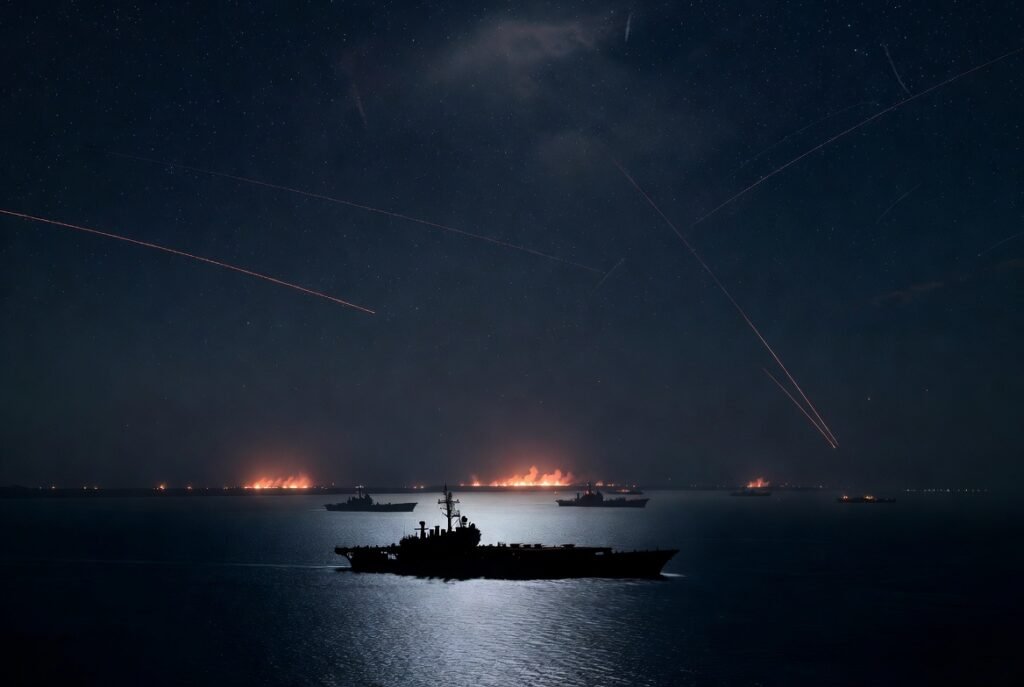
The air and naval phase of Operation Epic Fury, initiated on 28 February 2026 by the United States and Israel, has now entered its second month. With the regime’s senior leadership eliminated, including Supreme Leader Ali Khamenei, the focus in Washington has shifted to evaluating whether limited ground operations could complement ongoing strikes to achieve core objectives: degrading the regime’s remaining missile and drone capabilities, securing critical nuclear material, restoring freedom of navigation through the Strait of Hormuz, and imposing coercive leverage without committing to large-scale occupation. This assessment draws on open-source military analyses from the Institute for the Study of War (ISW), The War Zone, the Soufan Center, Hudson Institute, and commentary from Russian (TASS-affiliated analysts), Chinese (Global Times, Fudan University scholars such as Sun Degang and Liu Zhongmin), and Arabic sources (Asharq Al-Awsat). It evaluates feasible scenarios using current equipment inventories and terrain constraints, framed through the realist lens of military strategy: decisive limited objectives, attrition denial, and maritime chokepoint control. Full-scale regime change via invasion remains improbable across all assessed sources.
Current Damage to the Regime’s Forces
After five weeks of combined strikes exceeding 10,000–11,000 targets, the regime’s conventional military capacity has suffered severe, quantifiable attrition. ISW and CTP reporting document strikes on at least two IRGC Ground Forces divisions and one brigade in northwestern and Kurdish-majority areas, including the 31st Ashoura Mechanized Division (Tabriz), the 11th Amir ol Momenin Brigade (Ilam Province), and the Nabi Akram Operational Division (Kermanshah). In southwestern Iran, the 3rd Hazrat-e Mehdi Ranger Brigade (Khuzestan) and Fajr Division (Shiraz) rapid-response and special-forces units have been directly targeted. Missile production infrastructure—Khojir, Shahroud, Parchin, and Hakimiyeh complexes—has sustained “severe damage,” halting short- and medium-range ballistic missile output for the foreseeable future. Approximately 70 percent of ballistic missile launchers have been disabled, with launch rates dropping 86–90 percent from initial salvos and drone attacks reduced by 73 percent. The regime’s navy has been largely annihilated, with over 150 vessels damaged or sunk and mine-laying capacity curtailed. Air bases, air-defense systems (including ~85 percent of surface-to-air missiles), and Quds Force logistics (17 of 20 strategic transport aircraft) have been systematically degraded. Persian sources (Fars News, Tasnim) acknowledge defensive successes—claiming 137 U.S./Israeli drones downed—but concede the loss of centralized coordination. Israeli assessments (IDF briefings reported via Jerusalem Post) confirm the campaign has shifted the regime’s forces from offensive projection to survival-mode provincial autonomy.
Current Force Posture and Equipment
U.S. and Coalition Assets: The 31st Marine Expeditionary Unit (MEU) aboard USS Tripoli, with approximately 2,200 Marines and sailors, arrived in theater by late March 2026. Equipped for littoral operations, it includes a battalion landing team with F-35B stealth fighters for close air support, MV-22 Osprey tilt-rotors for rapid vertical insertion, AH-1Z Viper attack helicopters, and organic artillery/logistics sustainment for 15–30 days of independent action. The 11th MEU aboard USS Boxer is en route, adding further amphibious capacity. Elements of the 82nd Airborne Division (infantry battalions with light armored vehicles) are staging for parachute or air-land insertion. Delta Force and Ranger units provide raid capability. Coalition support includes British and French naval escorts for shipping protection and quiet basing access from Gulf Arab states. Total committed U.S. ground combat power remains optimized for raids and limited-objective seizures, not sustained occupation.
Regime’s Forces: The regular Artesh army retains roughly 350,000 active personnel, while IRGC Ground Forces number 150,000–190,000 core fighters supplemented by Basij mobilization. Post-decapitation, the regime has fully activated its decentralized “mosaic defense” (defā’-e mozā’iki) doctrine—31 semi-autonomous provincial commands, each with organic missile stocks, FPV drones, intelligence cells, and pre-delegated “fourth successor” protocols. This structure, refined since 2005 under former IRGC commander Mohammad Ali Jafari, enables independent provincial operations even after central command loss (ISW, March 2026; Soufan Center, 9 March 2026). Key equipment includes short/medium-range ballistic missiles (Fath-360: 120 km; Fateh-110: 300 km; Zolfaghar: 700 km), naval mines, coastal anti-ship systems, and Russian-supplied drone technology for swarming. Farzin Nadimi (Washington Institute) notes that each provincial “mosaic” functions as a self-contained military unit, resilient to decapitation but limited in coordinated large-scale counteroffensives.
Terrain remains the decisive factor: Zagros Mountains and desert expanses create natural chokepoints, exposing any ground advance to dispersed inland missile/drone fires that air superiority cannot fully suppress.
Evaluated Scenarios and War Games
Each scenario is assessed as a named military strategy, with equipment-driven analysis of operational length/method, payoffs, and risks. War games reflect the logic of military strategists—emphasizing Clausewitzian friction (terrain, logistics, enemy will), Sun Tzu terrain dominance, and limited-war coercion.
- Deep Penetration Raid for Nuclear Material Retrieval (Isfahan/Natanz) – “Precision Asset Denial Raid” Strategy Concept: Secure and extract ~400–460 kg of 60% enriched uranium buried at Isfahan (primary stockpile) or Natanz facilities, using special operations teams plus engineer detachments with heavy equipment for excavation. Equipment/Method: Delta Force/Rangers for initial seizure; MV-22 Ospreys and CH-53E helicopters for insertion/extraction; 1,000+ security cordon required for weeks due to rubble clearance. Distance (hundreds of km inland) demands sustained air cover and logistics vulnerable to FPV drones and IEDs. War Game (Stratagist View): From a Kissingerian perspective of coercive diplomacy, a swift raid mirrors 1980s special operations models—insert, deny, extract. However, regime provincial commands would converge via mosaic autonomy, imposing attrition. Expected length: 2–4 weeks for execution/extraction; friction from radiation hazards and local Basij response could extend to months. Payoffs: Eliminates material for potential weapons production; signals resolve. Risks: High casualties; unverifiable completeness; mission creep into urban fighting (Hudson Institute analyses; NYT intelligence reporting, March 2026). Consensus: Satellite monitoring remains lower-risk preference.
- Amphibious Seizure of Kharg Island – “Key Terrain Seizure” Strategy Concept: Occupy Kharg Island (29.23°N 50.32°E), handling ~90% of regime oil exports, to coerce Strait reopening. Equipment/Method: 1,500–2,500 Marines from 31st/11th MEUs via helicopter/amphibious assault post-suppression; F-35B for local air dominance; sustainment via sea lines. Island size (~20 km²) favors rapid tactical control but requires indefinite hold. War Game: Military strategists (e.g., Can Kasapoglu, Hudson Institute) view this as classic limited-objective amphibious doctrine—seize the economic chokepoint to break regime will. Regime’s mosaic defense enables mainland-launched Fateh-110 missiles, FPV drones, and fast boats to attrit occupiers. Length: Insertion in 24–48 hours; hold phase 4–12 weeks minimum under constant fire; extraction riskier than entry. Payoffs: Economic leverage; symbolic victory. Risks: Exposed supply lines; civilian population (~20,000) complicating rules of engagement; delayed impact on regime reserves (The War Zone; PBS expert commentary, March 2026). Russian analysts (TASS) deem it “symbolic rather than decisive.”
- Maritime Chokepoint Control of Hormuz Islands (Abu Musa, Greater/Lesser Tunb, Qeshm) – “Chokepoint Denial” Strategy Concept: Seize small islands at Strait entrances to secure shipping lanes without mainland commitment. Equipment/Method: MEU-scale forces with MV-22 Ospreys and LCACs for rapid insertion; organic artillery and AH-1Z for defense. Qeshm/Bandar Abbas variant escalates to urban/amphibious scale. War Game: Strategists assess this as maritime domain denial reversal—temporary safe corridors via island outposts. Regime mosaic units launch inland missiles/drones unaffected by coastal hold. Length: Seizure in days; sustainment weeks to months under rocket/drone attrition; legal disputes (UAE claims) add friction. Payoffs: Restores partial navigation; bargaining chip. Risks: Insufficient against dispersed regime fires; high exposure (Soufan Center; Chinese analysts Fu Qianshao, SCMP, March 2026). Liu Zhongmin (Fudan) notes it provides leverage but invites heavy casualties.
- Coastal Raids Against A2/AD Infrastructure – “Limited Attrition Strike” Strategy Concept: Helicopter-borne raids on missile batteries, radar sites, and fast-attack craft bases along the Gulf coast. Equipment/Method: MEU aviation (F-35B, MV-22, AH-1Z) plus special forces; small-footprint, hit-and-withdraw. War Game: Echoes historical counter-A2/AD raids—degrade threats incrementally. Regime’s dispersed mosaic limits strategic effect; inland launchers persist. Length: Days per raid cycle; repeated operations over weeks for cumulative degradation. Payoffs: Temporary shipping/air corridors. Risks: Persistent regime retaliation; resource drain (Middle East Institute parallels; War Zone reporting).
- Southern Land Corridor to Khuzestan – “Operational Corridor Exploitation” Strategy Concept: Advance from Gulf/Iraq toward oil-rich Khuzestan via desert routes. Equipment/Method: Mechanized elements from staging bases; long convoys vulnerable to drones/mines. War Game: Classic maneuver warfare logic fails against desert exposure and regime provincial ambushes. Length: Months if pursued, with unsustainable logistics. Payoffs: Direct energy infrastructure pressure. Risks: Hashd al-Shaabi friction in Iraq; vast “paper map vs. reality” gap (Arabic commentary, Asharq Al-Awsat; ISW terrain assessments). Widely assessed as non-viable.
- Full-Scale Multi-Axis Advance – “Regime Overthrow Occupation” Strategy Concept: Large-scale invasion to occupy major cities. Assessment: Uniformly improbable. Requires hundreds of thousands of troops; terrain and mosaic defense guarantee insurgency (ISW; Atlantic Council; Russian/Chinese sources). No mobilization at this scale observed.
Anticipated Length and Operational Methods
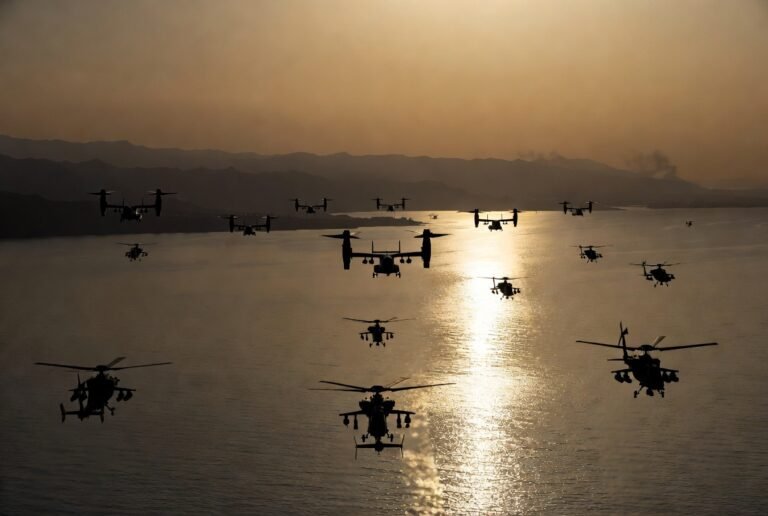
Limited raids or island seizures: Tactical execution in 1–7 days; exploitation/hold phases 2–12 weeks under attrition, driven by MEU sustainment limits and regime drone/missile persistence. Nuclear retrieval: 2–8 weeks minimum due to engineering demands. Any sustained presence risks mission creep, with casualties from FPV drones and mines eroding political support. Methods favor air-mobile, small-unit operations over mechanized advances—aligning with current equipment rather than massed ground forces. Political developments reinforce restraint: U.S. statements frame deployments as “maximum optionality” for coercion, not invasion; regime strategy emphasizes protracted attrition via mosaic resilience.
Analytical Assessment
Developments unfold in accordance with the logic of decisive limited war: degrade the regime’s coercive instruments while preserving the conditions for organic internal collapse. Admiral Brad Cooper’s public and operational doctrine—systematic elimination of manufacturing, launchers, and command nodes while maintaining “on-plan” execution—underpins the current air-naval phase and informs any ground augmentation. Israeli commentators (Assaf Orion/INSS) emphasize that ground operations must remain subordinate to the larger aim of fracturing centralized control. The regime messaging continues to project mosaic resilience, yet the documented attrition in production and provincial units reveals the widening gap between doctrine and capacity. Ground operations, therefore, serve as accelerants: by seizing economic chokepoints or denying residual strategic assets, they erode the regime’s ability to suppress dissent, paving the way for the popular uprising that will deliver regime change.
Key Takeaways
- Limited-Objective Strategies Viable but Constrained: Amphibious seizures (Kharg/Hormuz) or raids align with MEU/82nd capabilities and could yield leverage, yet mosaic defense and inland fires limit strategic impact.
- Terrain and Decentralization Favor Regime Attrition: Provincial autonomy ensures persistent resistance; no scenario achieves rapid decisive victory.
- Nuclear and Coastal Options Carry Highest Friction: Retrieval demands extended presence; island holds invite indefinite exposure.
- Full Occupation Non-Starter: Logistical and political realities preclude it, per all sources.
- Coercive Diplomacy as Preferred Endgame: Ground forces provide optionality, but success hinges on combining limited operations with economic and political pressure to shorten the conflict.
References
- Institute for the Study of War (ISW), Iran Update Special Reports (March 2026).
- Soufan Center, “Iran’s Mosaic Defense” Intel Brief (9 March 2026).
- Hudson Institute, Can Kasapoglu, “US Military Options for Kharg Island” (March 2026).
- The War Zone reporting on MEU deployments and Kharg scenarios (March 2026).
- Global Times / SCMP, analyses by Liu Zhongmin, Sun Degang, Fu Qianshao (March–April 2026).
- TASS and Russian military commentary on ground operation feasibility (March 2026).
- Asharq Al-Awsat and Arabic military commentary on risks (March 2026).
- Jerusalem Post reporting on U.S. Kharg Island planning (March 2026).
- Israel Hayom and Times of Israel on ground operation contingencies (April 2026).
- Fars News Agency and Tasnim News Agency statements on defensive claims and mosaic defense (March–April 2026).
- Hudson Institute, Can Kasapoglu analyses (March 2026).
- INSS perspectives (Brig. Gen. Assaf Orion, ret.).
- CENTCOM statements by Admiral Brad Cooper on campaign progress.