
Iran: The Moral Test of Our Time
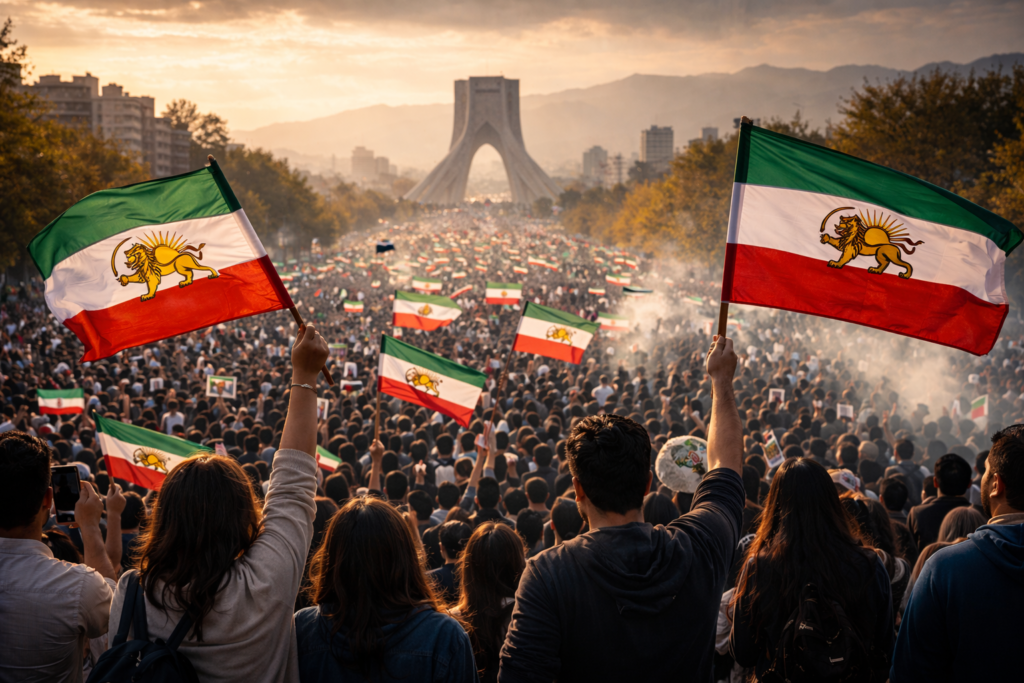
World history was written by those who said no—to Nazism, fascism, and totalitarianism—and who acted to rid the world of them. Had it not been for the sacrifices of the free world, and the sustained struggle of freedom-loving peoples, history might have been forced to live with Hitler and his likes for far longer.
The world became the world precisely because it defeated Hitler and outlived Stalin. Foreign intervention did not merely alter borders; it dismantled ideologies. Much of Europe, Scandinavia, and large parts of Africa were liberated. Germany, Japan, and Italy themselves were ultimately freed from murderous systems that had captured their states, societies, and moral horizons.
Iran today stands at a similar historical juncture.
The country is occupied by an expansionist ideological system that violates the most basic premises of the modern world. What is at stake is not merely a domestic political struggle, but a frontline contest over whether the moral lessons of the twentieth century—about life, dignity, and the limits of power—still bind the international community.
When Iranians demand freedom, it is not because they reject global values. It is because they stand with them: freedom of expression, the right to life, and above all, the right to live a normal life.
A life where one can love without harassment.
A life with a functioning economy and meaningful work.
A life where marriage, family, and personal choice are not subordinated to ideological expansion or perpetual conflict.
This demand for normality is itself a political act. Totalitarian systems cannot tolerate it, precisely because it rejects their claim to define meaning, sacrifice, and destiny. The insistence on an ordinary life exposes the abnormality—and the violence—at the core of ideological rule.
Iranians rise against the regime not out of fanaticism, but because they reject terrorism, violence, and endless war. They are patriots—no different in kind from an American who serves their country, or a British citizen who wants the best for their nation. Their struggle is not against the world, but against a system that has placed itself outside it.
If the world does not stand with Iran, it condemns itself to living longer—perhaps much longer—with a murderous ideology. History shows what even one additional day of such systems in power can cost.
So when some say that Iranians are fighting for the world, this is no exaggeration. Iranians are fighting on a frontline—a frontline the world effectively abandoned forty-seven years ago—and they are being killed on it.
Foreign assistance, and where necessary direct intervention, is therefore not a matter of preference or geopolitical convenience. It is a question of moral agency. When people are being killed for legitimate and universally recognized demands—life, freedom, dignity—and when the capacity to help exists, the burden shifts to the world to act, just as it has acted in other moments to prevent mass killing and genocide.
This is the most elementary principle of humanity: saving lives when one has the capacity to do so.